Loftia refined materials: Metal Plates, Planks, fabrics
Turn scrap wood, metal scraps, clay, sand and fibre into Metal Plates, Planks, Glass and fabrics at the Refining Station, level by level.
What does the Refining Station make?
It turns one raw material into one processed material, usually five inputs to one output. Eight recipes sit at level 1, and they cover what the starter stations need: Plank from scrap wood, Metal Plate from metal scraps, Adobe from clay, Plastic Sheet from plastic discards, Cotton Fabric from cotton, Mushroom Leather from portobello mushrooms, Rubber from tires and Straw from plant fibre.
Each craft draws energy from your island’s power supply, so a session at the machine competes with cooking and station building for the same battery.
Which recipes need Refining Station level 1?
| Refined material | Input | Quantity | Energy |
|---|---|---|---|
| Plank | Scrap Wood | 5 | 1 |
| Metal Plate | Metal Scraps | 5 | 1 |
| Adobe | Clay | 5 | 1 |
| Plastic Sheet | Plastic Discards | 5 | 1 |
| Cotton Fabric | Cotton | 3 | 1 |
| Mushroom Leather | Portobello Mushrooms | 5 | 1 |
| Rubber | Tire | 5 | 1 |
| Straw | Plant Fiber | 5 | 1 |
What opens at Refining Station level 2?
Level 2 adds the metal bars and the hard lumbers that mid-tier recipes use, at two energy per craft.
| Refined material | Input | Quantity |
|---|---|---|
| Aluminium Bar | Bauxite Ore | 5 |
| Copper Bar | Copper Scraps | 5 |
| Flexible Lumber | Rattan | 5 |
| Hard Lumber | Bamboo | 5 |
| Jute Fabric | Jute | 5 |
| Linen | Flax | 5 |
| Lignin | Bioluminescent Ivy | 5 |
| Silk | Bioluminescent Ivy | 5 |
| Banana Leather | Banana | 3 |
| Recycled Polyester | Plastic Discards | 5 |
Lignin and Silk share one input, so stock bioluminescent ivy before you decide which to make.
What needs Refining Station level 3?
Level 3 is where building parts arrive, and it holds nine recipes: Glass and Bricks from sand, Circuit Boards from electronic scraps, Rust Resistant Alloy from rusted metal, Eco Plank and Cardboard Fabric from cardboard, and three more fabrics from algae, fabric scraps and vines. Energy cost is three per craft.
Read the full recipe list, including what each material feeds into, in the recipe finder. Every refined material is a material in that table, so filtering by name shows both sides of the chain.
Where do the raw materials come from?
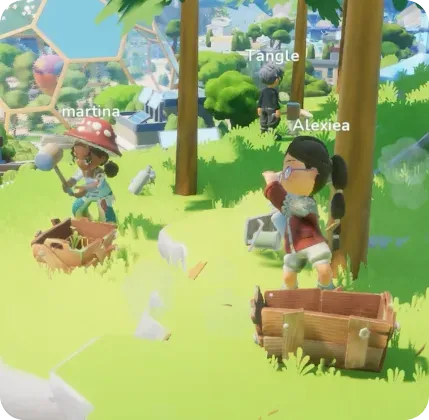
Most inputs are salvage. Scrap wood comes from the crates around the city perimeter, which show a hammer icon when you are close and respawn quickly. Clay comes from the mounds at the Construction Site, and screws, plastic discards and scrap wire come from Scrap Quarter containers and Solar Farm wire.
Crops and fibre — cotton, jute, flax, bamboo, rattan, vines — come from growing and foraging rather than salvage. Portobello mushrooms, the input for Mushroom Leather, grow on the hills around Loftia City and are harvested with the Pruners. Crafting lists the gathered materials and their first uses, and farming covers the planted ones.
Why will the machine not start a craft?
Check energy first: the station is powered, not manual, and a flat battery stops the craft. On keyboard and mouse the refine button has greyed out while a controller worked fine, so include your input device when you report it.
Use the in-game bug report for anything that survives a relog. The troubleshooting notes list the fixes already shipped.
What should you refine first?
- Refine Metal Plate and Plank first; every station upgrade and most furniture recipes start there.
- Hold one Plastic Sheet batch for tool and station recipes.
- Convert Cotton Fabric and Mushroom Leather once you start tailoring, not before.
- Leave level 2 and 3 materials until the station level is open, because the inputs are harder to replace.
For the order those stations unlock in, read the unlock order. Energy tiers are in salvaging and energy, and furniture that consumes these materials is in housing.
Related Articles
guides
Loftia storage: Personal Storage and a full bag
Build Personal Storage at the Project Station, ship crops and cooked dishes instead of hoarding them, and hand fish to the Research Station that lists them.
life
Loftia tailoring: clothing recipes and Bloom cost
The Tailoring Station holds 235 clothing recipes across three levels, and 138 of them cost Bloom as well as fabric. Here is what each tier asks for.
guides
Loftia seeds and watering: tool wheel and refills
Find the seeds a quest gave you in the Tool Wheel, refill the watering can at city stations, and plan around growth timers and the Advanced Watering Can.
Was this helpful?
Thanks for the feedback!